

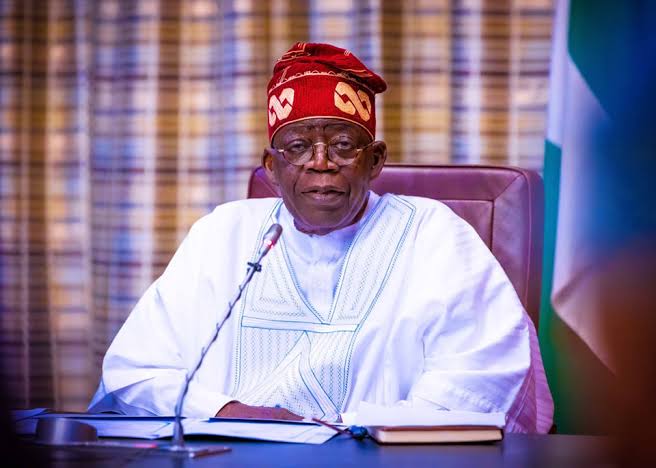
Transparency International Nigeria, an economist and other Nigerians have raised concerns over the Federal Government’s ₦50,000 cash transfer to vulnerable citizens under the National Emergency Relief and Stabilisation Intervention (NERSI).
The intervention introduced by President Bola Ahmed Tinubu’s administration has come under scrutiny over its transparency, funding, sustainability and ability to reduce poverty.
The concerns are emerging amid rising food prices and the high cost of living, with questions also being raised about beneficiary selection, the programme’s duration and its timing ahead of the 2027 general elections.
According to DAILY POST, the intervention commenced in October 2026 to provide immediate financial assistance to vulnerable Nigerians struggling with economic hardship.
The Federal Ministry of Humanitarian Affairs and Poverty Reduction, which is implementing the programme, said beneficiaries were selected from the National Social Register and verified national identity records.
The Federal Government also announced five implementing banks and digital payment platforms, including OPay, alongside designated USSD codes for eligible beneficiaries to access the funds.
Speaking at the programme’s launch on October 30, 2026, the Minister of Humanitarian Affairs and Poverty Reduction, Dr Bernard Doro, said approved financial technology companies and payment platforms would facilitate direct payments.
Although government officials have described the intervention as monthly support, the government has yet to provide sufficient details about its duration, funding arrangements and the total number of intended beneficiaries.
Nigerians report receiving ₦50,000 payments
The programme has generated debate over whether the payment can provide meaningful relief to households facing persistent economic difficulties.
DAILY POST reported that some Nigerians had received the money, while others identified as eligible beneficiaries were still waiting for payment.
One beneficiary, who spoke anonymously, said the money received through his OPay account helped his family purchase basic food items.
However, he described the assistance as temporary, arguing that the intervention should have been introduced earlier.
Another beneficiary said she received the payment after her bank notified her of her eligibility and requested confirmation.
She said the money enabled her to buy cooking gas and food, but was insufficient to cover her household’s broader needs.
Rising living costs raise questions over adequacy
The intervention comes amid persistent inflation and increasing prices of essential commodities.
The report put food inflation at 19.59 per cent, while LPG was selling for between ₦1,300 and ₦1,600 per kilogramme. Petrol prices were reported at between ₦1,325 and ₦1,420 per litre.
World Bank Group estimates cited in the report indicate that between 122 million and 133 million Nigerians are living in extreme poverty.
The figures have intensified questions about whether a ₦50,000 payment can significantly improve the living conditions of vulnerable households.
The timing of the intervention has also attracted attention, with the 2027 general elections approaching.
Economist questions long-term impact of NERSI
An economist and financial analyst, Godwin Oyedokun, described the cash transfer as a welcome social protection measure at a time when households are struggling with food, transportation, healthcare and other essential expenses.
However, he warned that the payment could only provide temporary relief and would not independently address the structural causes of poverty.
Oyedokun said the money could help families buy food, purchase essential medication and meet urgent domestic expenses.
He added that households with several dependants could exhaust the funds quickly, while the programme’s overall impact would depend partly on whether the payment was a one-off intervention or sustained monthly support.
According to him, poverty in Nigeria is linked to unemployment, low productivity, inadequate infrastructure, limited economic opportunities and the rising cost of goods and services.
He urged the Federal Government to complement cash transfers with job creation, agricultural development, vocational training, microenterprise financing, affordable healthcare and improved access to education.
The economist also called for transparent beneficiary selection, payment monitoring and independent programme evaluation.
He said the government should disclose NERSI’s funding arrangements, duration, coverage and measurable outcomes, while periodically reviewing the payment value in response to inflation.
Oyedokun maintained that the programme’s success should be measured by improvements in beneficiaries’ living conditions rather than simply the number of people paid.
‘It’s a bribe’ – TI Nigeria questions NERSI timing and funding
The Head of Transparency International Nigeria, Auwal Rafsanjani, questioned why the Tinubu administration did not introduce the cash transfer earlier, when Nigerians began experiencing worsening economic hardship following the government’s policy changes.
Rafsanjani argued that the timing of the intervention, ahead of the 2027 elections, raised concerns about its political motivation.
He suggested that the programme appeared more politically driven than a carefully designed poverty reduction strategy.
He also questioned whether ₦50,000 was sufficient to address the hardship facing Nigerians, given the rising cost of living.
The transparency advocate further demanded clarity on how beneficiaries were selected, how payments would be monitored and what accountability mechanisms had been established.
Rafsanjani also questioned the source of the funds and whether the National Assembly had approved the expenditure through the required appropriation process.
He argued that public funds must be spent in line with constitutional and budgetary requirements, warning that the absence of clear information could undermine confidence in the programme.
Despite his criticism, Rafsanjani acknowledged that any intervention capable of providing genuine relief to struggling Nigerians was welcome.
However, he maintained that the ₦50,000 payment alone would not address the country’s wider poverty and cost-of-living challenges.
